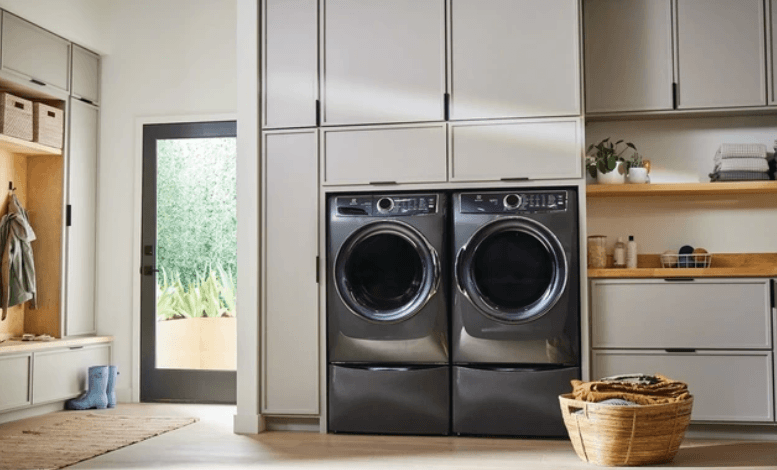
Anyone shopping for a new washer eventually runs into the same debate: front load or top load. If you care about deeper cleaning, gentler handling of fabrics, and a machine that fits neatly into a modern home, a front load washing machine usually wins that comparison. These machines tumble clothes through a pool of water instead of agitating them in a full tub, which means less wear on fibers and a wash that reaches every fold of fabric. For households juggling everyday loads, delicates, and the occasional heavily soiled batch, that difference in wash mechanics adds up over the years.
What Sets Front-Load Machines Apart
The biggest advantage of a front-load design is how the motor and drum work together. Many models now use a direct-drive motor connected straight to the drum, cutting out the belt and pulley system that older washers relied on. This setup runs quieter, lasts longer, and is efficient enough that some machines come backed by extended warranties of up to 10 years on the motor. Pair that with a multi-motion wash action, such as six distinct drum movements, and you get a machine that adjusts its tumbling pattern to match the load rather than using one generic cycle for everything.
Capacity is another area where front-load washers have improved. Several current models manage to fit a bigger drum inside the same overall footprint, so a compact-looking unit can still handle a 9kg or 11kg load. That matters in smaller laundry rooms or apartments where floor space is limited but wash volume still needs to keep up with a busy household.
Smart Features That Actually Help
Technology has quietly changed what a washer can do on its own. Some machines now use AI-based fabric detection that reads the load and automatically optimizes the wash cycle instead of leaving guesswork to the user. Steam-assisted cycles go a step further, helping reduce allergens and odors without extra detergent or a second rinse. For anyone comparing options, a well-equipped LG washing machine in this category often bundles these features together, along with app-based diagnostics that let the machine connect directly to customer support if something needs troubleshooting rather than waiting for a technician visit to even diagnose the issue.
Touch panels have also replaced clusters of dials and buttons on many models, giving the washer a sleeker look while making cycle selection simpler. It is a small design change, but it reflects a broader shift toward washers that feel more like connected home appliances than purely mechanical boxes.
Matching Capacity to Household Needs
Front-load washers now come in a wide range of sizes, so the right pick really depends on how much laundry a household generates in a typical week. A few common capacity tiers to consider:
- 7kg models, suited to smaller households or light, frequent laundry runs
- 9kg to 11kg models, a practical middle ground for families with regular mixed loads
- Combo washer-dryer units around 20/12kg, useful for anyone who wants washing and drying handled by a single machine
- Slim-design models, built for narrower utility spaces without sacrificing drum size
Some combo units also include fast wash technology that can complete a full cycle in under half an hour, which is worth factoring in for households that need quick turnarounds on busy weekdays.
See also: Understanding Mortgages: A Guide for Homebuyers
Why Durability and Support Matter Just as Much
A washer is a long-term purchase, so build quality and after-sales support deserve as much attention as wash performance. Direct-drive motors with multi-year warranty coverage reduce the likelihood of costly repairs down the line, and smart diagnostic features mean fewer service calls turn into guesswork. When a machine can flag its own issue and relay that information to support, troubleshooting becomes far less frustrating for the person doing the laundry.
Taken together, these details show why front-load washers have moved from a niche preference to a mainstream choice: they clean thoroughly, adapt to different fabric types, fit more capacity into less space, and increasingly manage themselves through smart features.
In the End
A front-load washer is as much about daily convenience as it is about wash quality, from fabric-sensing cycles to warranties that protect the investment for years. Before choosing a model, take a moment to think about your household’s real laundry habits: is it frequent small loads, occasional bulk washing, or a mix of both? Matching capacity and features to that pattern, rather than picking the first machine you see, is the simplest way to get lasting value out of a new washer.