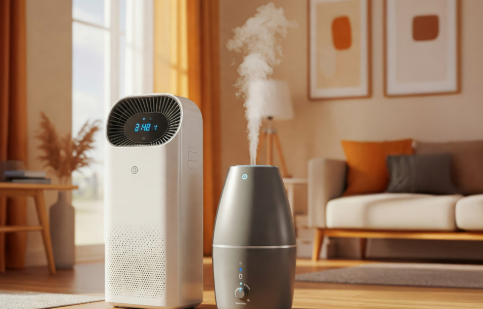
Most of us think about food, exercise, and sleep when we talk about health, but forget the thing we do constantly: breathing. The air in a typical home can contain dust, pollen, pet dander, smoke, cleaning chemicals, and moisture that’s either too high or too low. None of this looks dramatic, so it’s easy to ignore, yet it quietly influences our energy, sleep quality, and even mood.
We’re also spending more time indoors than ever—working, relaxing, and scrolling through our phones, maybe switching from emails to a quick round of the lightning roulette casino game or some other online distraction—so the invisible environment around us matters more than we think. The good news is that modern purifiers, humidifiers, and sensors can turn vague worry into concrete numbers and practical actions, without requiring an engineering degree.
Why Indoor Air Quality Deserves Attention
Indoor air can often be more polluted than outdoor air, especially in tightly sealed, modern buildings. We cook, burn candles, spray fragrances, use cleaning products, and bring in dust and pollen on our clothes. Tiny particles and gases can hang around in the still air of a living room or bedroom far longer than we imagine.
For some people, poor air quality shows up as sneezing, itchy eyes, or that heavy, dull feeling in the head. For others, it’s more subtle: restless sleep, a dry throat in the morning, or a sense that the house always feels a bit “stuffy.” While one bad air day isn’t the end of the world, the cumulative effect over months and years is what makes control of indoor air genuinely important, especially for children, older adults, and anyone with asthma or allergies.
Air Purifiers: What They Do and What They Don’t
Air purifiers are often sold as miracle boxes, but they’re really just fans and filters arranged intelligently. The fan pulls air through a series of filters designed to capture particles like dust, pet hair, and pollen. Finer filters can trap smaller particles, including some produced by smoke and cooking. A purifier doesn’t add anything to the air; it simply removes certain types of contaminants.
The key questions are: how big is the room, what kind of pollutants are you dealing with, and how noisy are you willing to let the machine be? A small, quiet unit may be fine for a bedroom but useless in a large open-plan space. Placement matters too. Tucking the purifier behind a sofa or under a table may look tidy, but it restricts airflow. Instead, it’s usually better near the center of the space, or at least where air can move freely around it.
Some purifiers come with extra features that claim to neutralize odors or break down gases. These can be useful, but they don’t replace basic ventilation. Opening a window for a few minutes, especially when cooking, is still one of the simplest and most effective ways to improve air quality.
Humidifiers and Dehumidifiers: Balancing Moisture
While purifiers deal with particles, humidifiers and dehumidifiers manage moisture. Air that’s too dry can irritate eyes, noses, and skin, and can make wooden furniture crack. Air that’s too humid can feel heavy, promote mold growth, and make dust mites thrive. The comfortable middle ground is usually somewhere between about 40% and 60% relative humidity.
Humidifiers add moisture, often by turning water into a fine mist that mixes with the air. They’re especially helpful in cold climates where heating systems dry the air out in winter. But they need regular cleaning; otherwise, they can spread the very things you’re trying to avoid, such as bacteria or mineral dust.
Dehumidifiers do the opposite, pulling moisture out of the air and collecting it in a tank or draining it away through a hose. They’re useful in basements, bathrooms, or any damp room where condensation appears on windows or walls. Used correctly, they can prevent that faint but persistent musty smell that never really goes away once it settles in.
Sensors and Monitors: Turning Guesswork into Data
It’s hard to manage what you can’t see. That’s where sensors and indoor air quality monitors come in. Simple devices measure humidity and temperature; more advanced models track fine particles, carbon dioxide, and sometimes volatile organic compounds released by paints, cleaners, and furniture.
The first benefit of sensors is awareness. A monitor might show that your bedroom is dry and cool at night but becomes stuffy by early morning, or that your living room’s humidity shoots up every time you cook. Instead of relying on vague feelings, you get numbers: humidity at 35%, carbon dioxide creeping up, particles spiking during frying. This data helps you decide whether to open a window, run a purifier, or adjust a humidifier.
Over time, patterns appear. You may notice that high particle levels correlate with certain habits, like burning incense or using a specific cleaning spray. Adjusting those habits can sometimes improve air quality more effectively than buying more devices. The real strength of sensors is their ability to guide small, smart changes rather than encouraging mindless gadget collecting.
Putting It All Together in a Real Home
The goal isn’t to turn your home into a sterile laboratory. It’s to make air quality good enough that you feel better, sleep more deeply, and worry less. For many people, a sensible setup might look like this: a medium-sized purifier in the main living area, a smaller one in the bedroom, a humidifier or dehumidifier depending on the climate, and at least one humble monitor that shows humidity and particle levels at a glance.
Alongside the devices, simple habits still matter. Ventilate after cooking, avoid smoking indoors, limit heavy use of scented sprays, and clean or vacuum regularly. Check filters on purifiers and clean humidifiers according to the manual. None of this is glamorous, but it’s these modest routines, combined with a few carefully chosen devices, that gradually transform the air you breathe every day.
In the end, thinking about air quality at home isn’t about chasing perfection. It’s about understanding the basics—what purifiers, humidifiers, and sensors can and can’t do—and choosing a few tools that fit your space, your budget, and your way of living. Once you’ve done that, you can let the machines hum quietly in the background and simply enjoy a home that feels a little fresher, softer, and kinder to your lungs.