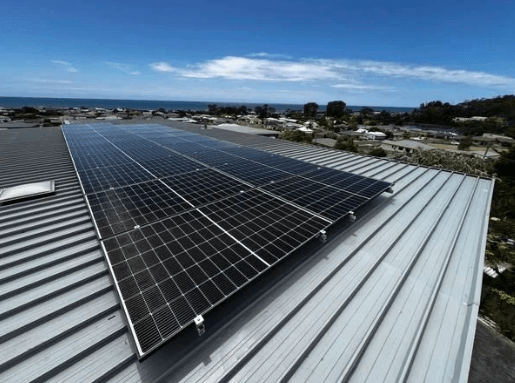
Choosing a solar installer for your Shoalhaven home is a decision with significant and long-lasting financial consequences. A solar photovoltaic system represents a substantial capital investment that is expected to generate returns over fifteen to twenty-five years, and the quality of the installation — the competence of the installer, the quality of the components selected, the accuracy of the system design, and the rigour of the commissioning process — determines whether the system delivers on its projected performance or underperforms in ways that are costly to diagnose and correct years after the original installer has moved on.
Accreditation and licensing
The starting point for evaluating any solar installer in the Shoalhaven is confirming that the business employs or subcontracts Clean Energy Council (CEC) accredited designers and installers. CEC accreditation is the industry standard for solar installation in Australia, and only CEC accredited installers are eligible to install systems that qualify for Small-scale Technology Certificates (STCs) — the federal government incentive that reduces the upfront cost of solar systems for most residential customers. An installer who cannot demonstrate current CEC accreditation is not meeting the minimum industry standard, and any system they install would be ineligible for STCs, eliminating a significant financial benefit from the purchase.
Working with an established local provider like Shoalhaven Solar brings the benefits of deep familiarity with the Shoalhaven region’s grid connection requirements, council regulations, and the specific installation challenges presented by the area’s housing stock — including heritage properties, different roof types, and the coastal conditions that affect equipment selection and installation techniques in Nowra, Berry, Ulladulla, and the surrounding communities. A locally established installer also has a genuine stake in their reputation within the community they serve, creating an accountability that national providers who operate through subcontractor networks may not have in the same way.
The Electrical Contractor Licence held by the installing business — or the individual licensed electrician performing the electrical work — is a separate but equally important credential to the CEC accreditation held by the solar designer and installer. All electrical connections in a solar installation must be performed by a licensed electrician, and the installation must be inspected and certificated by an appropriately licensed person before the system can be connected to the grid and the grid connection application lodged with Endeavour Energy or Essential Energy, depending on the specific location within the Shoalhaven.
System design and component quality
A quality solar installation begins with a system design that is genuinely tailored to the specific property, its consumption pattern, and its grid connection context. The design should specify panels, inverter, and mounting hardware with reference to the roof’s orientation, pitch, and available area; the household’s electricity consumption profile and the proportion of that consumption that occurs during daylight hours; any shading sources that will affect panel performance; and the grid connection requirements and export limits that apply in the specific area. A proposal that provides only a panel count, a system size, and a price without engaging with these property-specific factors is not based on a genuine design.
Panel and inverter brand selection is an area where the quality difference between installers becomes apparent. The solar panel market includes products at a wide range of price and quality points, and the cheapest options available to installers often come from manufacturers with limited track records, limited warranty support infrastructure in Australia, and performance characteristics that are not independently verified. Selecting panels and inverters from manufacturers who publish independently verified performance data, who have an established Australian warranty and service presence, and who have a documented track record of long-term reliability gives the homeowner confidence that the system will continue to perform as warranted throughout its expected operational life.
Quotes and comparisons
Obtaining at least three comparable quotes from different installers is the minimum due diligence for a solar purchase of this significance. For quotes to be genuinely comparable, they need to specify the same information: total panel capacity, panel brand and model, inverter brand and model, number and type of panels, mounting system, and the total installed price including all associated costs such as the switchboard upgrades, cabling, and metering changes that are sometimes quoted separately and that can add meaningfully to the headline system price. A quote that does not specify these details cannot be meaningfully compared with one that does.
Finding good information and the right tools is important in any area of significant decision-making. Just as bloggers use free blogging tools to improve their content creation and distribution process, homeowners comparing solar quotes benefit from using online comparison resources, consumer review platforms, and industry association directories to supplement the information provided by the installers themselves and to identify any concerns about specific companies’ track records, warranty handling, or customer service before committing to a purchase.
After-sales service and warranty support
The post-installation relationship with a solar provider matters as much as the installation itself, because solar systems require periodic monitoring and maintenance and because performance issues, warranty claims, and equipment failures are most effectively resolved through an ongoing relationship with a local provider who knows the system and has the capability to respond in a reasonable timeframe. An installer who has been in business in the Shoalhaven for several years and who has an established service capacity is a more reliable warranty partner than one who has recently entered the market or who operates primarily at a distance through remote monitoring with limited local service capability.
The manufacturer warranties on solar panels and inverters are ultimately only as valuable as the manufacturer’s willingness and ability to honour them. Selecting panels from manufacturers with an established Australian warranty process — rather than requiring the homeowner to navigate an overseas warranty claim — and inverters from manufacturers with Australian-based technical support and spare parts availability significantly reduces the practical risk that a warranty claim will be difficult or time-consuming to resolve. An experienced local installer will be able to provide informed guidance about the real-world warranty experience of the brands they recommend, drawing on their own history of managing warranty claims on behalf of customers over multiple years of operating in the region.